
CATHEDRAL OF THE BLESSED SACRAMENT
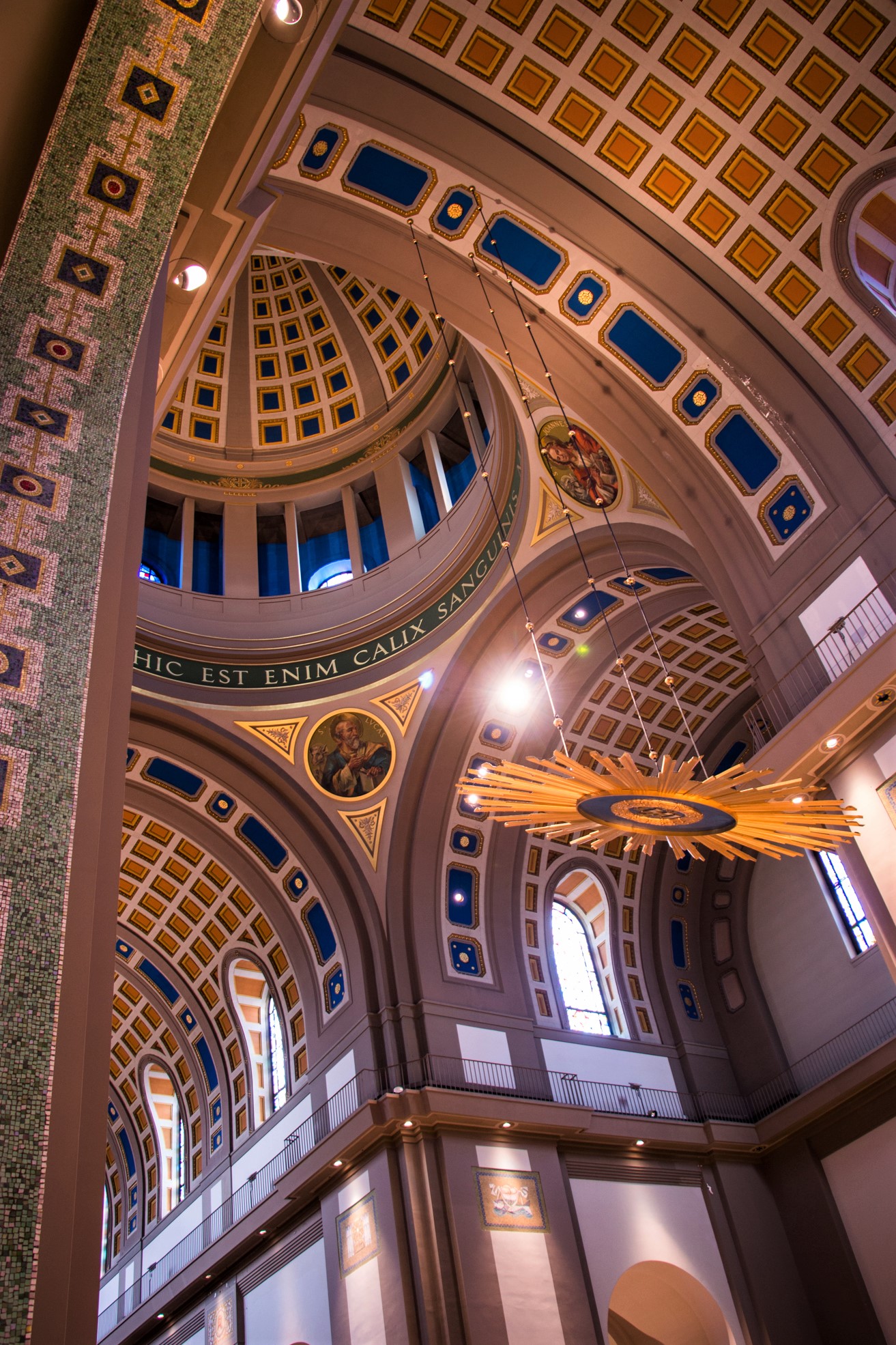
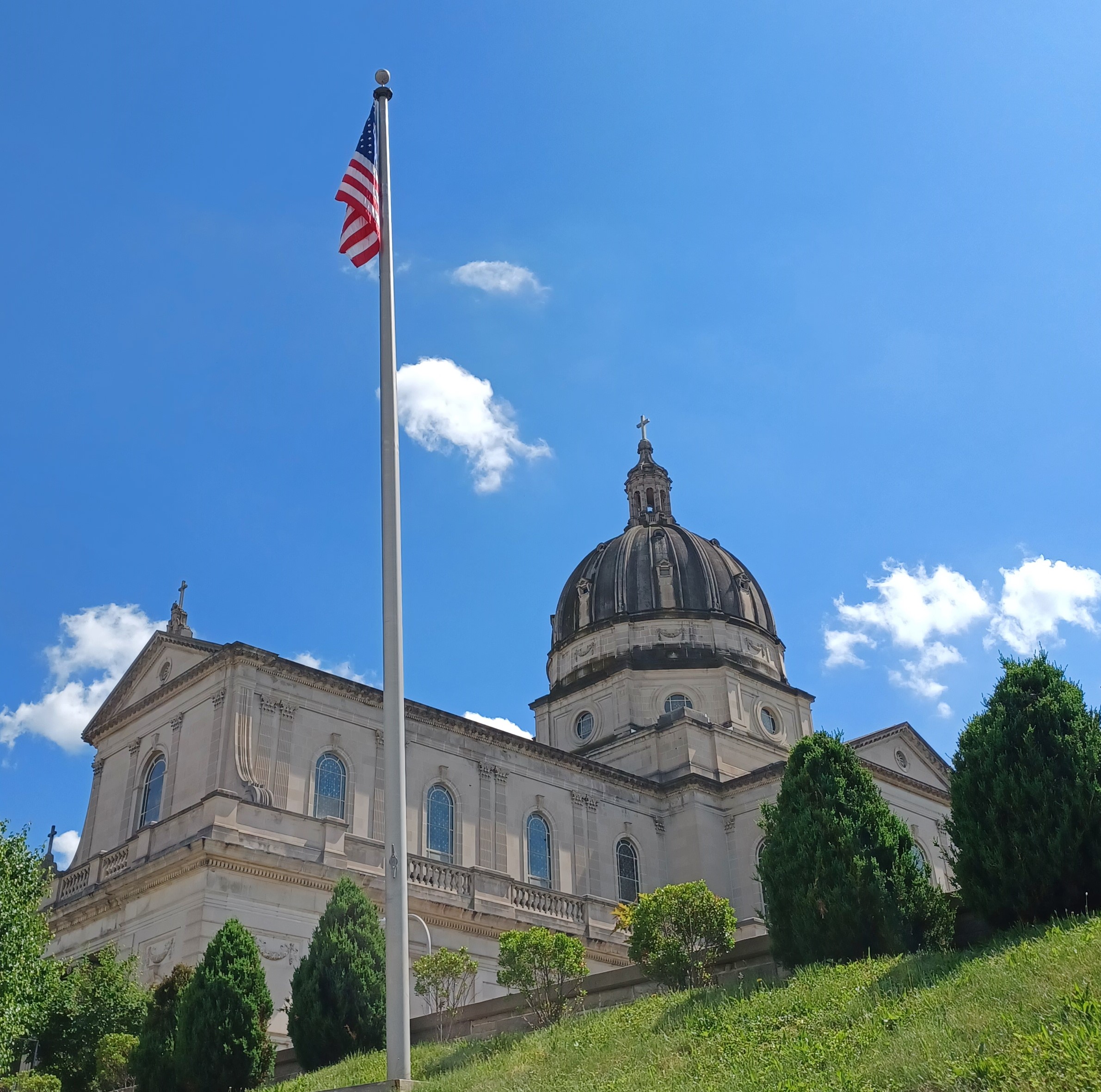
The Cathedral of the Blessed Sacrament Parish in Altoona, PA is a welcoming and compassionate community of believers striving to grow as God’s people.
As disciples of Jesus Christ, we offer lifelong faith formation for children, youth, and adults; and we live out Christ’s invitation to serve our sisters and brothers.
We gather to worship in prayer and song and invite all to joyfully participate in word and sacrament, especially the Eucharist.
SERVING THE PEOPLE OF GOD IN THE CITY OF ALTOONA, PA SINCE 1851.
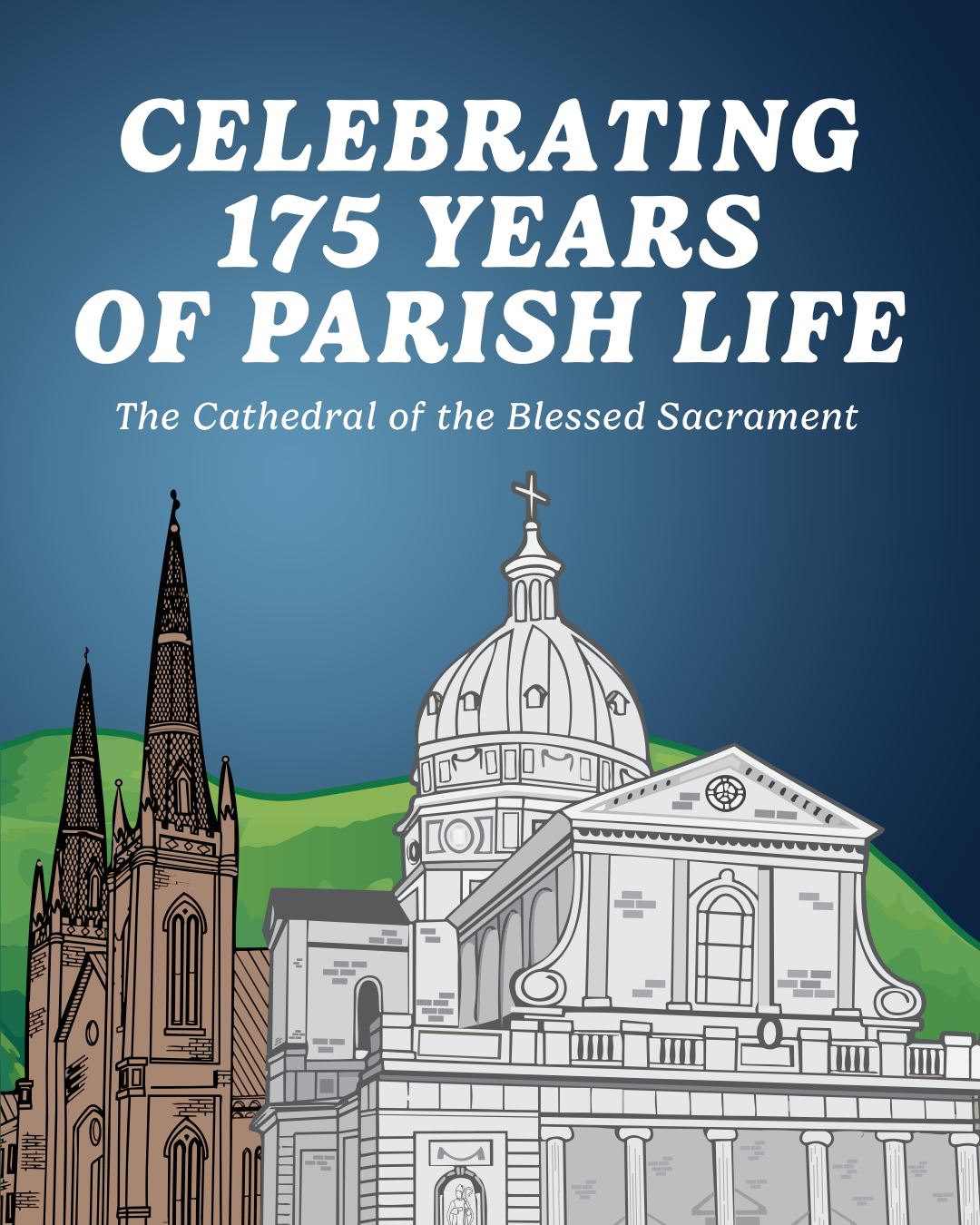
JOIN US AS WE CELEBRATE 175 YEARS OF PARISH LIFE IN THE HEART OF ALTOONA!
In 1851, St. John the Evangelist Church was established to serve the Catholic community of Altoona. As the community grew, so did the parish. In 1901, it became the pro-cathedral of the newly established Diocese of Altoona. Today, the Cathedral of the Blessed Sacrament stands as a testament to generations of faith, service, and community.
Join us for 5:00 PM Mass on Saturday, November 7th, followed by a social in the parish hall with catered refreshments.
Please click here to RSVP and join us in celebrating 175 Years of Parish Life!
DAILY MASSES
Monday-Saturday-Noon
WEEKEND MASSES
Vigil, Saturday at 5:00 P.M.
Sunday Masses at 8:00 A.M., 10:00 A.M. and 5:00 P.M.
SACRAMENT OF RECONCILIATION
Wednesday at 7:00 P.M.
Saturday: at 12:30 P.M.
By appointment: by calling or texting 814-937-8240


SUPPORTING THE MINISTRIES OF CATHEDRAL PARISH
By clicking on the GET INVOLVED link, you will find valuable information on how to make a financial donation to the Cathedral. The weekly offertory, the annual Catholic Ministries Drive, Bequests, and contributions to our Endowments are ways by which the blessings God has given to you become a blessing to the parish.
The 30th Sunday in Ordinary Time
October 25, 2026
GOSPEL MEDITATION

When I was in seventh grade, like most boys of that age, I was constantly hungry. I could eat at any hour of the day. Then I fell head over heels for a classmate named Kristin. One evening, while lying on my bed and pondering her perfections, my mom called me to dinner. For the first time in my adolescent life, I remember thinking: “I’m not hungry.” My heart longed for Kristin more than my stomach for food. Now, I wouldn’t confuse adolescent infatuation with mature love. But it was an experience of how love can reorder everything in our lives.
In today’s Gospel reading, Jesus says, “You shall love the Lord, your God, with all your heart” (Matthew 22:37). He is not issuing a burden or a moral goal for high achievers. He is naming the deepest orientation of the human heart. We were made for love so great that it gathers every other love into itself. Jesus does not ask us to love less the persons or things that attract us. Rather, he wants our love for God to be so total and intense that we love everything and everyone else because we love him so much.
Do we believe that such a love is possible for us? Because of the gifts of the Holy Spirit, it is! It is readily available to us. Let’s repent of our half-hearted love for God and ask Him to fill our hearts to the brim with divine love.
EVERYDAY STEWARDSHIP
I read an interesting article about how tolerance has become a substitute for love. As Christians we often talk about tolerance toward others when truly the call of Jesus Christ is to love others, not simply tolerate them. The truth is tolerance is a lot easier than love.
In tolerance, we are asked to give nothing away. It costs us nothing to simply allow people to be who they are, where they are, and stay in the state in which they find themselves. Love requires us to step outside of our comfort zone and to offer a part of ourselves to others. This makes us vulnerable and open to possible pain and discomfort. Those whom we seek to love could take advantage of us. It is easy to see why tolerance seems a bit more popular these days.
Jesus could have tolerated the religious hypocrites of his day. He could have tolerated the Romans who oppressed the Jews. He could have simply tolerated the tax collectors, prostitutes, and outcasts of his day. Instead, he loved them. He made himself vulnerable and open to pain. When we look at the cross, we see what can be the true price for love. It is easy to see why a policy of tolerance looks more desirable to many.
2026 Catholic Stewardship Consultants
REFLECTION
When the iconic Notre-Dame Cathedral of Paris burned in 2019, some made the argument that the money necessary to rebuild it would be better spent by the Church on providing services to the poor.
“After all,” I heard someone argue. “History is important, but humanitarianism is our religion.”
Close, but — as my father likes to say — no cigar.
Humanitarianism is actually not our religion, and you should never let anyone tell you it is. It’s a small mistake, but it can become a big one, fast. Humanitarianism is wonderful — it describes a set of principles animated by an underlying belief in the value of human life. But this is not sufficient. We can’t start with loving people and work our way up to God.
Why? Because I promise you, we will never end up reaching God.
If you have any doubt about this, you can consult literally any history book. Every war, every famine, every political disaster since the dawn of time has resulted from an attempt to put people first. “We’re putting our people first,” governments say — always right before they do something really, really heinous.
For what it’s worth, the Church hasn’t owned the Notre-Dame de Paris since the French Revolution. It was seized and rededicated to the Cult of Reason — the atheistic state religion that, it assured everyone, put people first (and put those people who disagreed to death at the guillotine).
We can’t start with love of people, because we will always displace some of the other people. Only by starting with love of God — heart, soul, and mind — can we enter the narrow gate of correctly loving other people.